


Deep Work: The Essential Skill to Thrive in a Distracted World
In today’s world, overflowing with notifications, digital distractions, and constant multitasking, focus has become a rare commodity. Yet, it is precisely this resource that determines the quality of our intellectual work and our ability to learn.
Enter Deep Work, a concept popularized by Cal Newport, a computer science professor at Georgetown University, which has become indispensable for anyone seeking high productivity and meaningful results.
What Is Deep Work?
Deep Work is the practice of working in a state of intense concentration, free from distractions, on cognitively demanding tasks.
Cal Newport defines Deep Work as:
“Professional activities performed in a state of distraction-free concentration that push your cognitive capabilities to their limit.”
In simpler terms, Deep Work allows you to:
Learn faster
Produce higher-quality results
Solve complex problems
Achieve creative breakthroughs
In contrast, Shallow Work refers to easy, repetitive, or low-value tasks like answering emails, attending unnecessary meetings, or multitasking.
Why Is Deep Work Essential Today?
1. Digital Distractions Are Everywhere
Smartphones, social media, and messaging apps constantly fragment our attention. Sustained focus is rare — and therefore valuable.
2. Knowledge Work Is Growing
Modern careers in tech, AI, research, and creative industries demand high cognitive effort.
3. A Massive Competitive Advantage
Those who master Deep Work:
Learn faster
Solve problems better
Produce more in less time
Become indispensable in their fields (IT, AI, teaching, entrepreneurship…)
Cal Newport’s 4 Principles of Deep Work
1. Work Deeply
Create rituals to support focus:
Isolated workspace
Phone on airplane mode
Dedicated time blocks
Pre-work ritual (tea, breathing, setting an agenda)
2. Embrace Boredom
Concentration is a muscle. Train it by tolerating boredom:
Avoid constant scrolling
Take phone-free breaks
Practice short meditation sessions
3. Quit Social Media or Limit Use
Evaluate every tool:
“Does it provide more value than it costs?”
If not, reduce or remove it.
4. Minimize Shallow Work
Shallow tasks should be:
Scheduled
Compressed
Automated or delegated
How to Practice Deep Work: 5 Simple Steps
Pick ONE high-value task – focus on just one thing.
Block 45–120 minutes – start with 45 min and gradually increase.
Eliminate distractions – close tabs, turn off notifications, tidy your desk, put your phone out of sight.
Start a timer – the brain enters “deep mode” after 10–20 minutes.
Review the session – what did you produce? What did you learn? What can be improved?
4 Deep Work Styles (Choose What Works for You)
1. Monastic
Full isolation for entire days – ideal for researchers, writers.
2. Bimodal
Mornings for Deep Work; afternoons for lighter tasks.
3. Rhythmic
Same time daily (e.g., 9–11 a.m.) – most effective for professionals.
4. Journalistic
Dive into Deep Work whenever you get a free window – requires experience and discipline.
Benefits of Deep Work
Increased productivity – achieve in 2 hours what others take 6 hours to do.
Higher quality output – clearer, more precise, more creative work.
Reduced stress – deep focus fosters control and satisfaction.
Accelerated learning – crucial for AI, programming, engineering, languages, research, and entrepreneurship.
Career advantage – makes you more competent, reliable, fast, and sought-after.
How to Incorporate Deep Work Into Your Life
Define your priorities – what truly matters?
Schedule 1–2 Deep Work sessions per day
Reduce digital distractions
Create a focused environment
Use simple tools – Pomodoro timer, website blockers, Kanban boards, noise-canceling headphones
Track progress – hours of Deep Work, results produced, improvements needed
Conclusion: Deep Work Is the Skill of the Future
Deep Work is more than a productivity method; it’s a way of working.
In a world full of distractions, those who master deep, focused work gain:
Greater performance
Increased creativity
More freedom
Greater satisfaction
Deep Work is rare — and in the modern knowledge economy, rarity equals value.
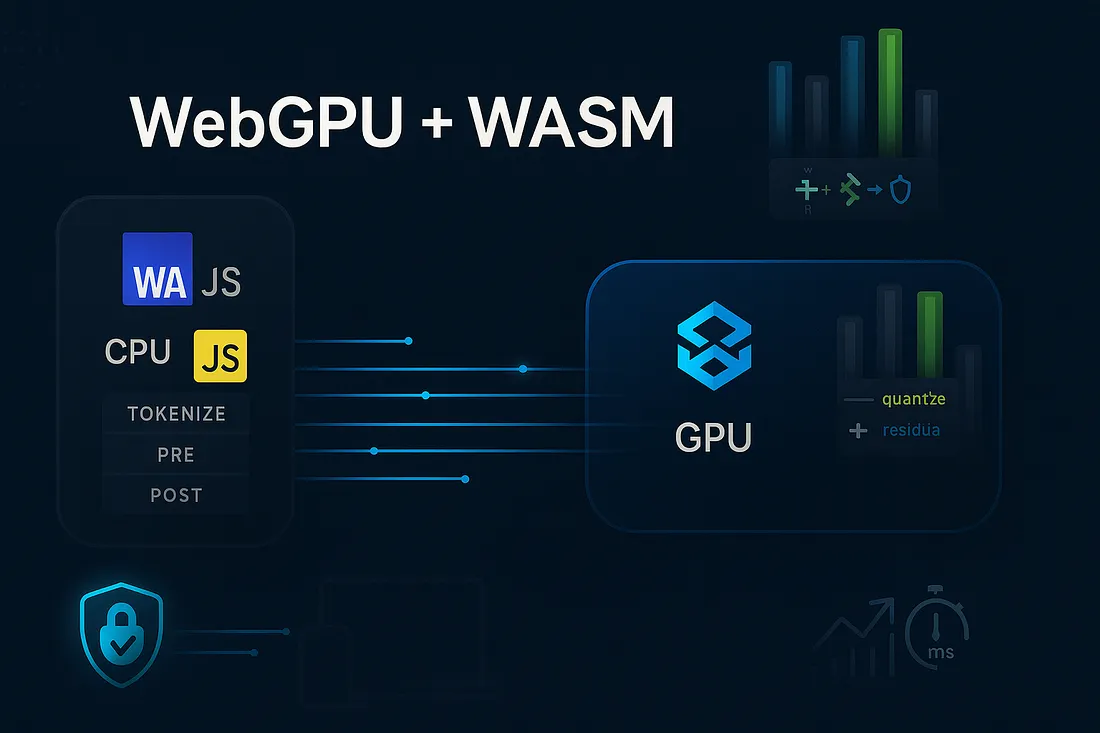
WebGPU & WebAssembly
WebGPU and WebAssembly (Wasm) are the two technologies that make the modern web fast, GPU-accelerated, and capable of running AI models locally—something impossible just a few years ago.
1) WebGPU — The Next-Gen Graphics & Compute API
What is WebGPU?
WebGPU is the new GPU API for the browser, meant to replace WebGL. It works similarly to Vulkan, Metal, and DirectX 12, giving low-level access to the graphics card.
Why WebGPU matters in 2025
5–10× faster than WebGL
Native GPU compute (critical for AI models)
Can run LLMs and image models directly in the browser
Modern, clean API
Better security and performance tuning
What WebGPU is used for
Running AI models (LLMs, image generation, vision)
Real-time 3D graphics
Browser-based games
Medical/architectural 3D tools
Image/video processing
Scientific simulations
Browser support
Chrome
Edge
Safari ⚠partial
Firefox ⚠experimental
2) WebAssembly (Wasm) — Near-Native Performance on the Web
What is WebAssembly?
WebAssembly is a binary format that allows languages like C, C++, Rust, and Go to run in the browser at near-native speed, inside a secure sandbox.
It’s the key technology that allows heavy, native-style applications to run in browsers.
Why WebAssembly matters
Extremely fast execution
Memory-safe and sandboxed
Portable across all browsers
Works with multithreading
Ideal for AI, games, simulations, and heavy UI apps
Typical WebAssembly use cases
Game engines (Unity, Unreal)
AI inference engines (ONNX Runtime Web, WebLLM)
Video / photo editors
CAD and 3D modelling tools
Scientific computing
Python, Rust, or C++ running inside a website
3) WebGPU + WebAssembly = High-Performance Web
Together, they enable native-level applications in the browser, without plugins.
WebAssembly handles:
Core logic
Heavy math
AI inference engines
Physics
Simulations
WebGPU handles:
Rendering
GPU shaders
Compute kernels
GPU acceleration for AI
Combined, they enable:
Stable Diffusion running entirely in the browser
Llama 3 or Mistral models on local GPU via WebGPU
Blender-like apps natively in Chrome
AAA-style browser games
Real-time video analysis + AI
Nothing to install. Everything runs in the browser.
4) WebGPU vs WebGL
Feature
WebGL
WebGPU
GPU compute
❌ No
✔ Yes
Performance
Moderate
Very high
Based on
OpenGL ES
Vulkan/Metal/DX12
AI support
❌
✔ GPU compute native
Future-proof
❌
✔ Modern API
WebGPU replaces WebGL for any high-performance use case.
5) WebAssembly + Rust = The Best Combo
Rust has become one of the most popular languages for WebAssembly workloads.
Why Rust + Wasm is so strong
Memory safe
Fast
Great tooling (wasm-bindgen, wasm-pack)
Perfect for multithreaded workloads
Works beautifully with WebGPU shaders and compute pipelines
In 2025, many AI inference engines are now written in Rust + WebGPU.
In Summary
WebGPU = next-gen GPU API → 3D + AI compute
WebAssembly = near-native execution in the browser
Together → they enable full-power applications directly in the browser, including AI models, games, editors, simulations, and more.

Learning a New Language: Pros and Cons
Learning a New Language: Pros and Cons
Learning a new language can be an exciting and enriching journey, but it’s not always easy. Whether for work, travel, or personal growth, there are many arguments for and against taking on a new language.
This article explores both sides to help you decide if learning a language is worth your time and effort.
Arguments FOR Learning a New Language
1. Cognitive Development
Learning a language stimulates the brain, improves memory, and enhances problem-solving skills. Bilingual or multilingual people often have better mental flexibility and analytical thinking.
2. Career Opportunities
Speaking multiple languages is a huge advantage in the job market. It opens doors to international positions, overseas assignments, and increases your resume value.
3. Travel and Cultural Experiences
Knowing the local language enriches travel experiences: you can interact authentically, understand local traditions, and immerse yourself in the culture more deeply.
4. Open-Mindedness
Learning a language is also learning about a new culture. It encourages curiosity, tolerance, and understanding of cultural differences.
5. Health Benefits
Studies show that learning languages can delay cognitive decline, improve concentration, and boost mental agility.
6. Social Skills
Speaking a foreign language helps communicate with people from other countries, build international friendships, and increase self-confidence.
Arguments AGAINST Learning a New Language
1. Time and Commitment
Learning a language requires a significant time investment and discipline. Progress can be slow at first, which may discourage some learners.
2. Frustration and Stress
Mistakes are frequent, and pronunciation or grammar can be challenging. This can create frustration, especially for adults who may find learning harder than children.
3. Financial Cost
Courses, apps, books, or language immersion programs can be expensive.
4. Fluctuating Motivation
Without a clear goal (travel, work, passion for the culture), it’s easy to lose motivation and give up after a few weeks or months.
5. Long Time to Achieve Mastery
Reaching a professional or fluent level often takes several years of consistent practice. This can be a challenge for some people.
Conclusion: Should You Learn a New Language?
Learning a language offers many cognitive, professional, and cultural benefits, but it requires time, patience, and motivation.
Tips for Success:
Set a clear goal (travel, career, personal development).
Choose the right method (courses, apps, immersion).
Start small and progress step by step to avoid frustration.
Be consistent: 15–30 minutes a day is enough to make progress.
In summary, the benefits usually outweigh the drawbacks, especially when approached with a structured and motivating plan.

How To Tell Time In German: A Complete Guide
How to Tell Time in German: A Complete Guide
Telling time in German may seem tricky at first, especially because Germans often use expressions that don’t exist in English. But once you learn a few simple rules, it becomes easy — and even fun!
This guide breaks down everything you need to know: how to ask the time, how to read the hour, how to use the 24-hour format, and the unique German expressions like “halb sieben” (which actually means 6:30, not 7:30!).
Let’s get started.
1. How to Ask for the Time in German
Here are the most common ways to ask “What time is it?”:
English
German
Notes
What time is it?
Wie spät ist es?
Very common
What time is it?
Wie viel Uhr ist es?
More formal/literal
Do you have the time?
Haben Sie die Uhrzeit?
Polite form
To answer, Germans usually start with:
➡️ Es ist … (It is…)
2. How to Tell the Hour
German uses Uhr (literally “o’clock”) when telling time:
Es ist drei Uhr. → It’s 3:00
Es ist sieben Uhr. → It’s 7:00
Es ist zwölf Uhr. → It’s 12:00
👉 In spoken language, people sometimes drop Uhr, especially for whole hours:
Es ist neun. (It’s nine.)
3. Minutes After the Hour
Just like English “past,” Germans say:
… nach … = after
Example:
Es ist zehn nach neun. → 9:10
You can also use:
… Minuten nach
Es ist zwanzig Minuten nach acht. → 8:20
4. Minutes Before the Hour
Germans use:
… vor … = before
Es ist zehn vor zwei. → 1:50
Es ist fünf vor acht. → 7:55
5. The TRICKY German “halb” Rule
This is the part that confuses most learners!
In German:
halb + next hour = half to the next hour
Examples:
German
Literal
Actual Time
halb sieben
half to 7
6:30
halb zehn
half to 10
9:30
halb eins
half to 1
12:30
👉 Think of it like “halfway to the next hour.”
6. Quarter Hours: “Viertel nach” and “Viertel vor”
Super simple:
Viertel nach = quarter past
Viertel vor = quarter to
Examples:
Es ist Viertel nach drei. → 3:15
Es ist Viertel vor neun. → 8:45
⚠️ In parts of southern Germany & Austria, you may hear:
Viertel drei → 2:15 (But this is regional — stick to Viertel nach/vor.)
7. Using the 24-Hour Clock (Very Common in Germany)
Germany frequently uses the 24-hour format, especially in:
transport (trains, buses)
schedules
workplaces
appointments
Examples:
14:00 → vierzehn Uhr (2:00 pm)
18:30 → achtzehn Uhr dreißig (6:30 pm)
21:45 → einundzwanzig Uhr fünfundvierzig (9:45 pm)
In casual speech, though, Germans often switch back to the 12-hour system.
8. Putting It All Together (Examples)
German
Meaning
Es ist halb neun.
8:30
Es ist zwanzig nach vier.
4:20
Es ist fünf vor elf.
10:55
Es ist Viertel nach zwei.
2:15
Es ist Viertel vor sieben.
6:45
Es ist drei Uhr dreißig.
3:30
Es ist neun.
9:00
9. Quick Cheat Sheet
Past the hour
5 minutes past → fünf nach
10 minutes past → zehn nach
Quarter past → Viertel nach
Before the hour
5 minutes to → fünf vor
10 minutes to → zehn vor
Quarter to → Viertel vor
German special
halb + next hour → :30
Conclusion
Telling time in German becomes simple once you understand the special structure of:
nach (after)
vor (before)
halb (half to)
the 24-hour format
Master these patterns, and you’ll understand German schedules, conversations, and daily life with ease!
The Most In-Demand Skills in 2030
The future of work is changing faster than ever. With the rise of artificial intelligence, automation, robotics, and digital transformation, many jobs will disappear, evolve, or be completely reinvented. To stay competitive in a rapidly shifting market, it's essential to know which skills will be most in demand by 2030.
In this article, we’ll explore the technical, cognitive, human, and entrepreneurial skills that will matter most — and, more importantly, how you can start developing them today.
1. Essential Technology Skills for 2030
. Artificial Intelligence Literacy
By 2030, AI will be embedded in almost every industry: marketing, healthcare, finance, education, manufacturing, and more. Even if you’re not a programmer, understanding how AI systems work will be a major advantage.
Key skills to develop:
Prompt engineering
Automation tools (Zapier, Make, APIs)
Basic machine learning concepts
AI ethics and governance
. Data Literacy and Analytics
Data-driven decision-making is quickly becoming the standard. Being able to understand, analyze, and interpret data will be as essential as writing an email.
Skills that matter:
Data literacy
Analytical tools (Excel, Notion, Python, PowerBI)
Data visualization
A/B testing and decision analysis
. Cybersecurity & Data Protection
As digital systems expand, cyber threats become more frequent and more complex. Cybersecurity professionals will be among the most sought-after experts.
Core skills:
Network security
Cloud security
Risk management
Compliance (GDPR, ISO 27001)
2. Cognitive Skills That Will Set You Apart
. Critical Thinking
In a world overflowing with information and misinformation, the ability to evaluate, question, and analyze is priceless. Companies are looking for people who can think independently.
How to strengthen it:
Read across disciplines
Practice structured analysis
Engage in debates and argumentation
. Complex Problem-Solving
As automation handles repetitive tasks, humans will be expected to tackle problems requiring creativity and strategy.
How to develop this:
Learn design thinking
Practice analytical frameworks
Use project-based learning
Break problems into solvable parts
. Creativity & Innovation
Where machines execute, humans imagine. Creativity will become one of the most valuable differentiators.
Examples:
Innovating new solutions
Designing new products or services
Thinking “outside the box”
3. Human & Social Skills (More Important Than Ever)
. Advanced Communication (written, verbal & digital)
As workplaces become more remote and global, communication becomes a critical skill.
Communication strengths for 2030:
Professional writing
Cross-cultural communication
Storytelling & presentations
Negotiation
. Emotional Intelligence
Machines don’t feel — humans do. Leaders of 2030 will excel in understanding, managing, and leveraging emotions.
Developing emotional intelligence:
Empathy
Stress management
Conflict resolution
Giving and receiving feedback
. Remote Collaboration
Distributed work is here to stay. Knowing how to collaborate online with global teams will be a must.
Key competencies:
Mastery of collaboration tools
Asynchronous communication
Clear documentation
Time-zone coordination
4. Entrepreneurial Skills in High Demand
. Adaptability & Continuous Learning
The #1 skill of 2030 is simple: learning how to learn quickly. Those who continuously upgrade their skills will stay ahead — always.
How to build it:
Daily micro-learning
Structured learning routines
Openness to new disciplines
. Agile Project Management
Modern companies favor flexibility and speed. Agile methods will dominate project management across industries.
Skills:
Scrum / Kanban
Prioritization
Leading hybrid teams
OKR frameworks
. Entrepreneurial Mindset
Companies increasingly want people who:
take initiative
solve real problems
create value
understand customer needs
Even as an employee, thinking like an entrepreneur will give you a strong advantage.
Conclusion: What Should You Start Learning Today?
To be truly future-ready for 2030, focus on this winning trio:
✔ Tech Skills: AI, data, cybersecurity
✔ Cognitive Skills: critical thinking, problem-solving
✔ Human Skills: communication, leadership, collaboration
Add lifelong learning on top of that, and you’ll be one of the most valuable professionals in the workforce of tomorrow.
AI and Work: Which Jobs Are Really Changing in 2025?
AI and Work: Which Jobs Are Really Changing in 2025?
Artificial intelligence is no longer a future concept. In 2025, it is actively reshaping the way we work. Some jobs are evolving, others are being redesigned. One thing is certain: AI changes tasks, not humans.
In this article, we explore the sectors most impacted and what this means for professionals today.
1.Administrative Jobs: The Invisible Revolution
AI now automates most repetitive tasks:
email sorting and drafting
data entry
document creation
basic schedule management
information extraction
What’s changing: Roles are shifting toward coordination, communication, and project management.
New essential skill: mastering AI copilots and productivity assistants.
2.Content Creation: The Era of Creative Copilots
With tools like ChatGPT, DALL·E, Midjourney, and Runway, creators now produce faster:
articles
videos
visuals
marketing campaigns
scripts
Human value today: Taste, coherence, vision, fact-checking, and storytelling.
Jobs aren’t disappearing—they’re becoming more editorial, strategic, and creative.
3.Developers & Data Specialists: Fewer Mechanical Tasks
With Copilot, Replit, and Cursor, coding becomes faster:
automatic function generation
instant documentation
generated test suites
AI-assisted refactoring
Developers are not being replaced, They’re shifting toward:
architecture
security
code review
AI integration
2025 marks the rise of the software orchestrator.
4.Marketing & Customer Service: Hyper-Personalization
AI optimizes:
segmentation
automated emails
generated ad campaigns
advanced chatbots
performance analysis
Human work now focuses on:
strategy
optimization
creativity
deep audience understanding
Humans decide; AI executes repetitive tasks.
5.Human Resources: AI Assists, It Doesn’t Recruit
In 2025, AI supports HR teams by:
analyzing CVs and skill profiles
writing job postings
preparing interview questions
detecting inconsistencies
automating routine HR tasks
HR remains fundamentally human: Empathy, culture, mediation, and final decision-making stay in human hands.
6.Finance & Accounting: Automation Under Supervision
AI handles:
risk analysis
forecasting
anomaly detection
accounting automation
What changes: Professionals become more like analysts, auditors, and strategic decision-makers.
7.Industry, Logistics & Robotics: From Manual Work to AI Supervision
Autonomous warehouses, smart logistics tools, and intelligent robots are becoming the norm.
New role: Operators shift into AI supervisors and automation technicians.
8.Healthcare: More Time for Patients
AI assists with:
image analysis
note taking
preliminary diagnostics
medical documentation
The result: Healthcare workers spend more time on what matters most: patients.
Who Really Wins in 2025?
Jobs that benefit
✔ creative roles ✔ analysts ✔ human-centered professions (HR, education, healthcare) ✔ developers & data experts ✔ managers & coordinators
Jobs undergoing transformation (not elimination)
– administrative roles – data entry – level-1 support – repetitive content production
Conclusion: AI Changes Jobs, Not People
The question is no longer “Will AI replace my job?” But rather: “How will AI reshape my job?”
In 2025, the professionals who succeed are those who know how to:
- collaborate with AI - understand its limits - keep strong human expertise - learn quickly
AI does not eliminate work — it transforms it.
