



The Most In-Demand Skills in 2030
The future of work is changing faster than ever. With the rise of artificial intelligence, automation, robotics, and digital transformation, many jobs will disappear, evolve, or be completely reinvented. To stay competitive in a rapidly shifting market, it's essential to know which skills will be most in demand by 2030.
In this article, we’ll explore the technical, cognitive, human, and entrepreneurial skills that will matter most — and, more importantly, how you can start developing them today.
1. Essential Technology Skills for 2030
. Artificial Intelligence Literacy
By 2030, AI will be embedded in almost every industry: marketing, healthcare, finance, education, manufacturing, and more. Even if you’re not a programmer, understanding how AI systems work will be a major advantage.
Key skills to develop:
Prompt engineering
Automation tools (Zapier, Make, APIs)
Basic machine learning concepts
AI ethics and governance
. Data Literacy and Analytics
Data-driven decision-making is quickly becoming the standard. Being able to understand, analyze, and interpret data will be as essential as writing an email.
Skills that matter:
Data literacy
Analytical tools (Excel, Notion, Python, PowerBI)
Data visualization
A/B testing and decision analysis
. Cybersecurity & Data Protection
As digital systems expand, cyber threats become more frequent and more complex. Cybersecurity professionals will be among the most sought-after experts.
Core skills:
Network security
Cloud security
Risk management
Compliance (GDPR, ISO 27001)
2. Cognitive Skills That Will Set You Apart
. Critical Thinking
In a world overflowing with information and misinformation, the ability to evaluate, question, and analyze is priceless. Companies are looking for people who can think independently.
How to strengthen it:
Read across disciplines
Practice structured analysis
Engage in debates and argumentation
. Complex Problem-Solving
As automation handles repetitive tasks, humans will be expected to tackle problems requiring creativity and strategy.
How to develop this:
Learn design thinking
Practice analytical frameworks
Use project-based learning
Break problems into solvable parts
. Creativity & Innovation
Where machines execute, humans imagine. Creativity will become one of the most valuable differentiators.
Examples:
Innovating new solutions
Designing new products or services
Thinking “outside the box”
3. Human & Social Skills (More Important Than Ever)
. Advanced Communication (written, verbal & digital)
As workplaces become more remote and global, communication becomes a critical skill.
Communication strengths for 2030:
Professional writing
Cross-cultural communication
Storytelling & presentations
Negotiation
. Emotional Intelligence
Machines don’t feel — humans do. Leaders of 2030 will excel in understanding, managing, and leveraging emotions.
Developing emotional intelligence:
Empathy
Stress management
Conflict resolution
Giving and receiving feedback
. Remote Collaboration
Distributed work is here to stay. Knowing how to collaborate online with global teams will be a must.
Key competencies:
Mastery of collaboration tools
Asynchronous communication
Clear documentation
Time-zone coordination
4. Entrepreneurial Skills in High Demand
. Adaptability & Continuous Learning
The #1 skill of 2030 is simple: learning how to learn quickly. Those who continuously upgrade their skills will stay ahead — always.
How to build it:
Daily micro-learning
Structured learning routines
Openness to new disciplines
. Agile Project Management
Modern companies favor flexibility and speed. Agile methods will dominate project management across industries.
Skills:
Scrum / Kanban
Prioritization
Leading hybrid teams
OKR frameworks
. Entrepreneurial Mindset
Companies increasingly want people who:
take initiative
solve real problems
create value
understand customer needs
Even as an employee, thinking like an entrepreneur will give you a strong advantage.
Conclusion: What Should You Start Learning Today?
To be truly future-ready for 2030, focus on this winning trio:
✔ Tech Skills: AI, data, cybersecurity
✔ Cognitive Skills: critical thinking, problem-solving
✔ Human Skills: communication, leadership, collaboration
Add lifelong learning on top of that, and you’ll be one of the most valuable professionals in the workforce of tomorrow.
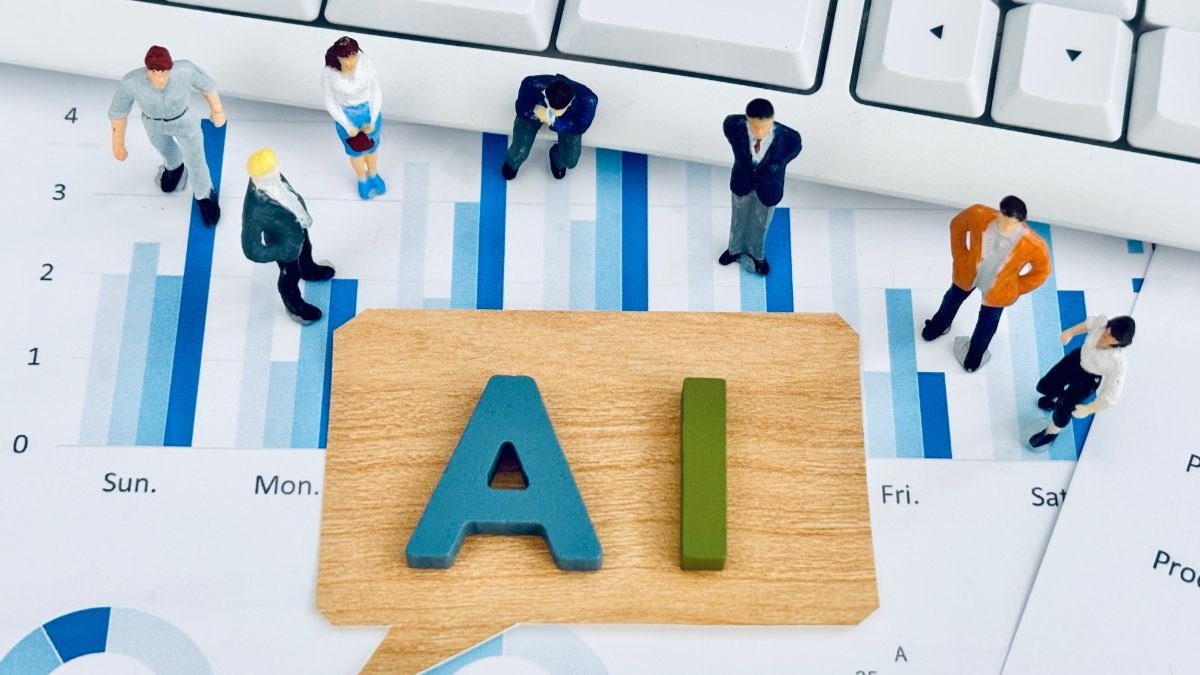
AI and Work: Which Jobs Are Really Changing in 2025?
AI and Work: Which Jobs Are Really Changing in 2025?
Artificial intelligence is no longer a future concept. In 2025, it is actively reshaping the way we work. Some jobs are evolving, others are being redesigned. One thing is certain: AI changes tasks, not humans.
In this article, we explore the sectors most impacted and what this means for professionals today.
1.Administrative Jobs: The Invisible Revolution
AI now automates most repetitive tasks:
email sorting and drafting
data entry
document creation
basic schedule management
information extraction
What’s changing: Roles are shifting toward coordination, communication, and project management.
New essential skill: mastering AI copilots and productivity assistants.
2.Content Creation: The Era of Creative Copilots
With tools like ChatGPT, DALL·E, Midjourney, and Runway, creators now produce faster:
articles
videos
visuals
marketing campaigns
scripts
Human value today: Taste, coherence, vision, fact-checking, and storytelling.
Jobs aren’t disappearing—they’re becoming more editorial, strategic, and creative.
3.Developers & Data Specialists: Fewer Mechanical Tasks
With Copilot, Replit, and Cursor, coding becomes faster:
automatic function generation
instant documentation
generated test suites
AI-assisted refactoring
Developers are not being replaced, They’re shifting toward:
architecture
security
code review
AI integration
2025 marks the rise of the software orchestrator.
4.Marketing & Customer Service: Hyper-Personalization
AI optimizes:
segmentation
automated emails
generated ad campaigns
advanced chatbots
performance analysis
Human work now focuses on:
strategy
optimization
creativity
deep audience understanding
Humans decide; AI executes repetitive tasks.
5.Human Resources: AI Assists, It Doesn’t Recruit
In 2025, AI supports HR teams by:
analyzing CVs and skill profiles
writing job postings
preparing interview questions
detecting inconsistencies
automating routine HR tasks
HR remains fundamentally human: Empathy, culture, mediation, and final decision-making stay in human hands.
6.Finance & Accounting: Automation Under Supervision
AI handles:
risk analysis
forecasting
anomaly detection
accounting automation
What changes: Professionals become more like analysts, auditors, and strategic decision-makers.
7.Industry, Logistics & Robotics: From Manual Work to AI Supervision
Autonomous warehouses, smart logistics tools, and intelligent robots are becoming the norm.
New role: Operators shift into AI supervisors and automation technicians.
8.Healthcare: More Time for Patients
AI assists with:
image analysis
note taking
preliminary diagnostics
medical documentation
The result: Healthcare workers spend more time on what matters most: patients.
Who Really Wins in 2025?
Jobs that benefit
✔ creative roles ✔ analysts ✔ human-centered professions (HR, education, healthcare) ✔ developers & data experts ✔ managers & coordinators
Jobs undergoing transformation (not elimination)
– administrative roles – data entry – level-1 support – repetitive content production
Conclusion: AI Changes Jobs, Not People
The question is no longer “Will AI replace my job?” But rather: “How will AI reshape my job?”
In 2025, the professionals who succeed are those who know how to:
- collaborate with AI - understand its limits - keep strong human expertise - learn quickly
AI does not eliminate work — it transforms it.
10 French Idiomatic Expressions to Speak Like a Native
10 French Idiomatic Expressions to Speak Like a Native
Introduction
Are you learning French and want to sound like a native? French idiomatic expressions are essential! They make your speech more natural and help you better understand everyday conversations.In this article, you’ll discover the 10 most common French idiomatic expressions, with their meaning, concrete examples, and practice exercises.
1.Avoir le cafard
Meaning: to feel sad, depressed.Example: Depuis qu’il a perdu son travail, il a le cafard. → Since he lost his job, he’s been feeling down.
Exercise: Complete: When it rains all week, I ______.
2.Coûter les yeux de la tête
Meaning: to be very expensive.Example: Cette robe de luxe coûte les yeux de la tête. → This luxury dress costs an arm and a leg.
Exercise: Think of something that is too expensive and write a sentence using this expression.
3.Donner sa langue au chat
Meaning: to give up guessing, not find the answer.Example: Je ne trouve pas la solution, je donne ma langue au chat ! → I can’t find the answer, I give up!
Exercise: If you can’t answer a riddle, what do you say?
4.Être dans la lune
Meaning: to be distracted, daydreaming.Example: Excuse-moi, j’étais dans la lune, je n’ai pas entendu. → Sorry, I was daydreaming, I didn’t hear.
Exercise: True or false? Être dans la lune means being very focused.
5.Poser un lapin
Meaning: to stand someone up, not show up to an appointment without warning.Example: Il m’a posé un lapin hier soir. → He stood me up last night.
Exercise: Rewrite in first person: She stood her friend up.
6.Avoir la pêche / la frite
Meaning: to be in great shape, full of energy.Example: Aujourd’hui, j’ai la pêche ! → Today, I feel great!
Exercise: Complete: After a good night’s sleep, I ______.
7.Tomber dans les pommes
Meaning: to faint.Example: Quand il a vu le sang, il est tombé dans les pommes. → When he saw the blood, he fainted.
Exercise: Replace to faint in this sentence: She fainted during the concert.
8.Se creuser la tête
Meaning: to think hard, to rack one’s brain.Example: Je me creuse la tête pour trouver une idée de cadeau. → I’m racking my brain to find a gift idea.
Exercise: Complete: When I have a difficult exam, I ______.
9.Mettre son grain de sel
Meaning: to give one’s (often unwanted) opinion, to butt in.Example: Il met toujours son grain de sel dans les discussions. → He always sticks his nose into conversations.
Exercise: Rewrite: My sister often gives her opinion even when no one asks for it. → Use the expression.
10.Avoir le coup de foudre
Meaning: to fall in love at first sight.Example: Ils ont eu le coup de foudre dès le premier regard. → They fell in love at first sight.
Exercise: Write one sentence about a “love at first sight” moment (for a person, a place, or even an object).
Tips for Memorizing These French Idiomatic Expressions
Make personal sentences using each expression.
Associate them with mental images to remember them better.
Use them in short dialogues out loud to practice.
Conclusion
Learning French idiomatic expressions will help you improve your language skills and communicate more like a native speaker. The more you practice, the more natural they will become.
